Grid-Forming Inverter Digital Twins for Low-Inertia Renewable Grids
Power Systems
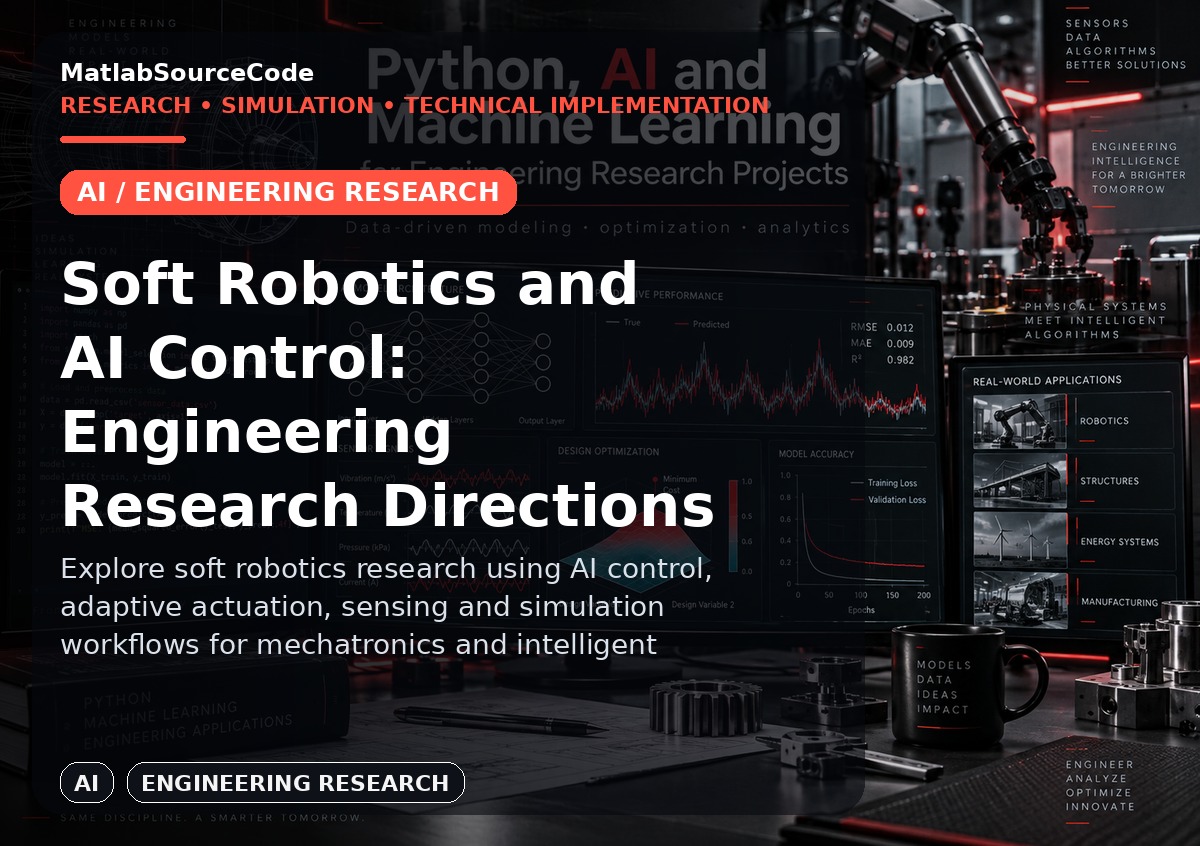
Soft robotics is moving from material experimentation toward intelligent systems that can sense, adapt and interact safely. The combination of compliant mechanics, embedded sensing and AI control creates a rich multidisciplinary research space.
Soft actuators require nonlinear material models, contact and large-deformation mechanics. FEA can be used to study geometry, pressure and material stiffness.
Vision, pressure, strain, IMU and force sensing can be fused to estimate configuration and interaction forces.
Model-based control, adaptive control and reinforcement learning can be compared for trajectory tracking, grasping or interaction tasks.
Tracking error, energy consumption, robustness, force regulation, generalization and safe interaction are useful performance measures.
Share your research title, abstract or base paper. The model, controller, case studies and required plots can be scoped around your research objective and software version.

EV & Mechanical