Electrodynamic Finite Element Simulations Comsol Simulation
Electrodynamic Finite Element Simulations Comsol Simulation is an SEO-ready FEA & CFD Engineering project page for OEM simulation teams, PhD scholars and engineering research users. The page includes software workflow, methodology, expected outputs, video transcript, thumbnail metadata and related project paths.
PROJECT_THUMBNAIL
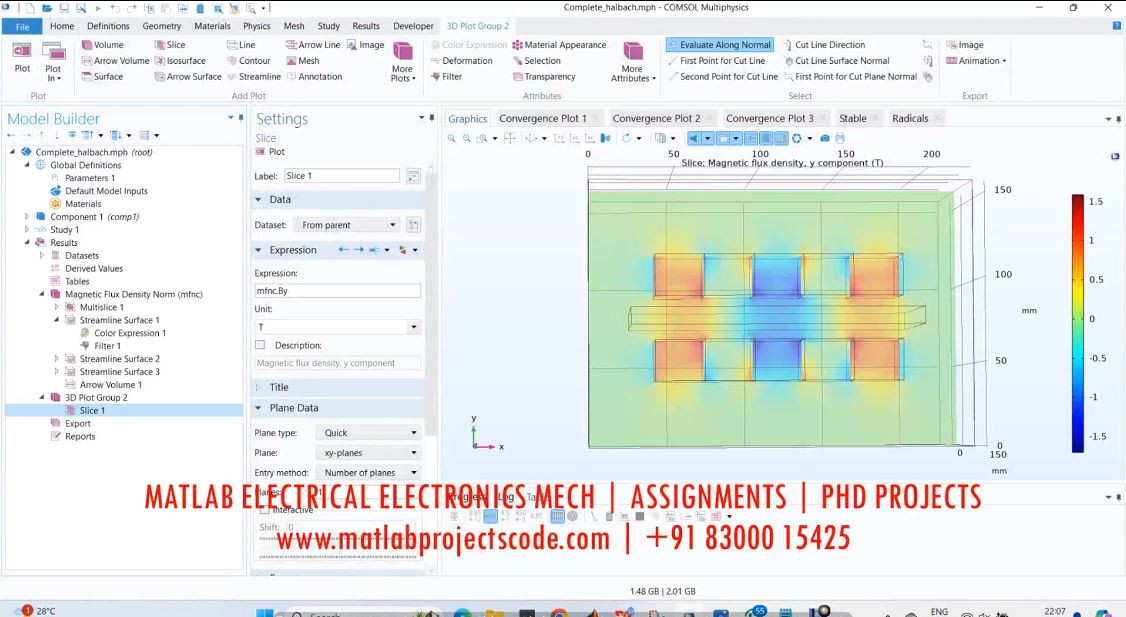
REPRESENTATIVE_CONTENT_NOTICE
Notice: contents are for representative purposes, actual content may vary according to the final source model, software version, parameter settings, waveform requirements, report format and OEM or PhD research customization.
PROJECT_OBJECTIVE
Electrodynamic Finite Element Simulations Comsol Simulation is prepared as a dedicated FEA & CFD Engineering simulation project page for OEM teams, PhD research scholars, engineering students and research laboratories in AU, UK, CA and global markets. The objective is to make the model easy to discover, review and discuss by clearly connecting the project title, software workflow, expected outputs and engineering application.
SOFTWARE_USED_AND_MODEL_SCOPE
The simulation support path is based on COMSOL. The model can be prepared or customized with source files, parameter values, subsystem screenshots, controller logic, waveform outputs and technical documentation. For research use, the work can be aligned with thesis methodology, journal paper implementation, assignment requirements or OEM validation notes.
Simulation model explanation: the workflow normally includes geometry setup, material properties, boundary conditions, mesh preparation, solver configuration and interpretation of temperature, stress, velocity, pressure or deformation fields.
CONTROL_ALGORITHM_METHODOLOGY
The methodology section can be expanded with mathematical modelling, block-level signal flow, controller/algorithm design, assumptions, solver settings, parameter tuning and comparison cases. For the project title Electrodynamic Finite Element Simulations Comsol Simulation, the explanation is written around the domain keywords, software environment and expected research outputs so that the page is suitable for search engines and human reviewers.
EXPECTED_WAVEFORM_OUTPUTS
- simulation response plots
- parameter table
- model screenshots
- result explanation
- temperature contour
- velocity/pressure field
- stress/deformation plot
- mesh and boundary-condition screenshots
APPLICATIONS_AND_RESULT_INTERPRETATION
Applications include academic project implementation, PhD proof-of-concept modelling, journal paper validation, OEM prototype assessment, controller comparison, result reproduction and engineering documentation. Result interpretation can explain waveform behaviour, steady-state and transient performance, overshoot, settling time, power quality, efficiency, tracking performance or field distribution depending on the domain.
VIDEO_TRANSCRIPT_AND_THUMBNAIL
This video preview demonstrates the Electrodynamic Finite Element Simulations Comsol Simulation simulation workflow. It is intended to help OEM engineers, PhD scholars and research teams understand the model structure, key input parameters, output response and expected validation path in FEA & CFD Engineering. The page supports MATLAB/Simulink, COMSOL, HFSS, ANSYS or related engineering simulation documentation depending on the project platform.
Direct video file for search engines: open MP4 simulation output.
PROJECT_FAQ
What is the objective of Electrodynamic Finite Element Simulations Comsol Simulation?
The objective is to model, simulate and explain Electrodynamic Finite Element Simulations Comsol Simulation as a research-ready FEA & CFD Engineering workflow with verifiable outputs for OEM evaluation, PhD research and engineering documentation.
Which software is used for Electrodynamic Finite Element Simulations Comsol Simulation?
The project is prepared around COMSOL and can be supported with model files, simulation setup, parameter values, output graphs and explanation notes.
Can this project be modified for a thesis or journal paper?
Yes. The model can be customized for new parameters, control algorithms, comparison tables, waveform style, university formatting and journal-style methodology sections.
What files can be delivered for this project?
Delivery can include the source model, simulation video reference, screenshots, graphs, parameter sheets, report documentation and a detailed explanation of the result interpretation.